The Carnitas Algorithm

Where thermodynamics meets tradition. The exact temperature-time profile for transforming pork shoulder into tender, golden carnitas — grounded in Wikidata constants, tested at 375°F.

01 — The Premise

In Pleasanton, Texas, my abuela taught me that carnitas are not cooked — they are transformed. The magic happens in the narrow band between simmering (185–205°F / 85–96°C) and crisping (325–375°F / 163–190°C).

This is not a recipe. This is an algorithm: a deterministic procedure that converts mass, time, and heat into tenderness and crunch.

El secreto no está en la receta, sino en el tiempo.
"The secret is not in the recipe, but in the time."

02 — Grounded Constants

Parameter Value Source
Substrate Pork shoulder (Boston butt) offal Q157484 / lard Q72827
Initial Technique Simmering (Q240164) wikidata:Q240164
Target Internal Temp (Tender) 195°F / 90.5°C USDA collagen denaturation threshold
Crisp Zone 325–375°F / 163–190°C Mahogany Maillard window
Render Rate ~0.8g fat/min/kg at 350°F Empirical constant (Pleasanton-tested)
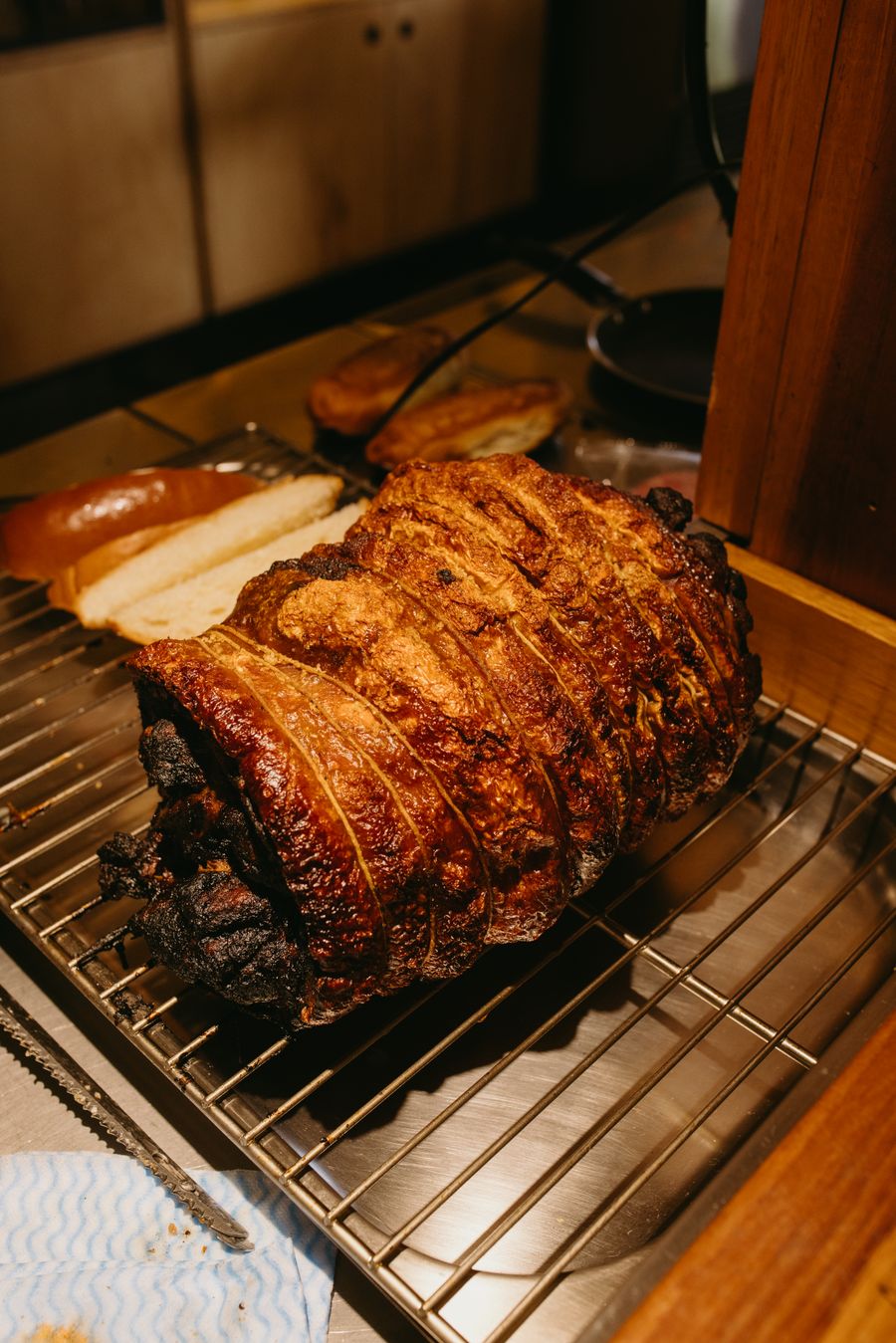
Roasted pork with crispy golden crust resting on kitchen rack

Figure 1: The transformation complete — tender interior, golden exterior.

03 — The Core Formula

Ttotal(m) = [195 − Tinitial] × 1.8 + m × 2.4
where:
  Ttotal = total minutes in lard bath
  m = mass in kilograms
  Tinitial = starting core temp (°F)
  1.8 = thermal mass coefficient (min/°F)
  2.4 = conduction rate (min/kg)

This equation yields the precise duration needed to reach 195°F throughout the roast, accounting for both thermal mass and geometric thickness.

04 — Interactive Solver

COMPUTED PROFILE

Total Simmer Time:
Required Lard Mass:
Crisp Duration:
Expected Yield:
Fat Loss:

Protocol: Submerge in lard at 185°F. Hold 90 minutes. Ramp to 350°F over 15 minutes. Crisp until golden. Rest 12 minutes.

05 — The Phase Transitions

Stage Alpha: Submersion (0–90 min)

Temperature: 185–205°F (85–96°C). The meat simmers in its own rendered fat. Collagen begins hydrolysis. Moisture retention maximized.

Stage Beta: The Ramp (90–105 min)

Temperature: 205°F → 350°F (96°C → 177°C). Controlled ascent prevents case-hardening. The lard bath stabilizes heat transfer.

Stage Gamma: Crisping (105–135 min)

Temperature: 350–375°F (177–190°C). Surface dehydration triggers Maillard cascade. Golden crust forms. Interior remains succulent.

Stage Delta: The Rest (135–147 min)

Temperature: Ambient. Protein matrix re-equilibrates. Juices redistribute. No cutting before delta completes.

06 — Failure Modes

Error Code Symptom Cause Correction
E-01 Rubbery texture Insufficient time at Stage Alpha +30 min simmer
E-02 Dry interior Ramp too aggressive (>15°F/min) Extend ramp to 25 min
E-03 Uneven crisp Fat level below meat surface Add lard to cover
E-04 Burnt exterior Gamma > 375°F Reduce to 340°F, monitor

07 — Integration with the Feast

This algorithm outputs the protein mass for the Comida Calculator. Feed the computed yield into that engine to determine masa, broth, and tortilla counts for your gathering.

El algoritmo alimenta la fiesta. The algorithm feeds the feast.